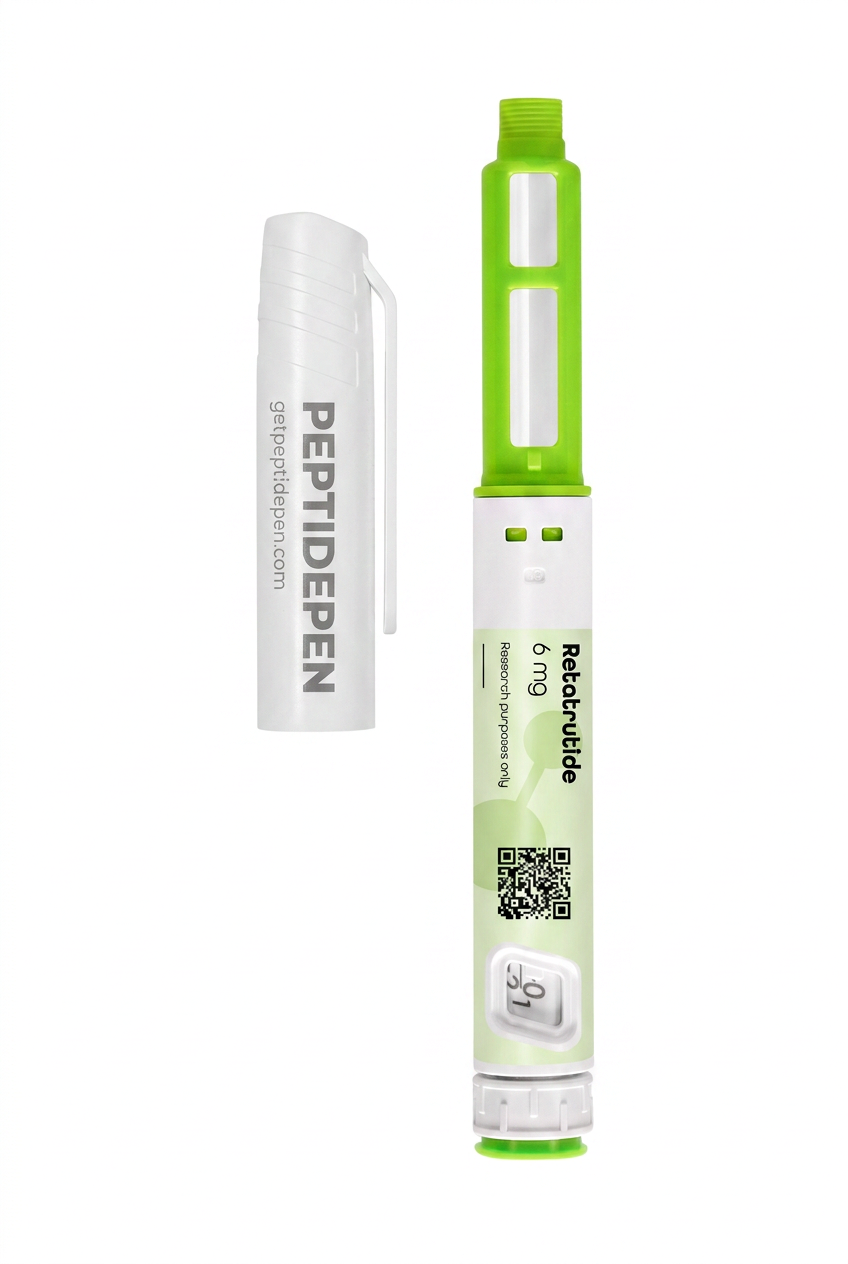
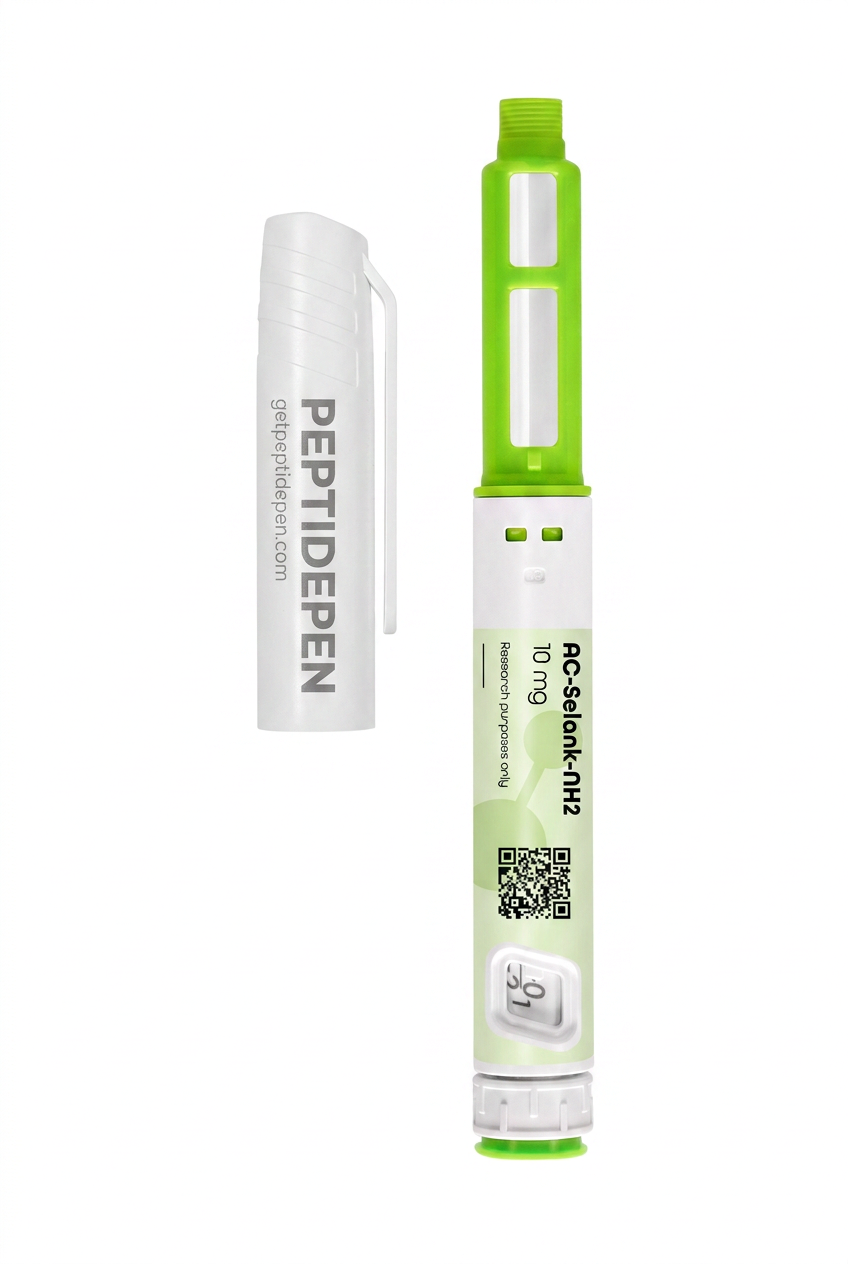
What is MOTS-c?
MOTS-c is a peptide molecule discovered by Dr. Ping Ling and a team of scientists at the University of Southern California. This peptide is located in the mitochondria, the "energy centers" of our cells.
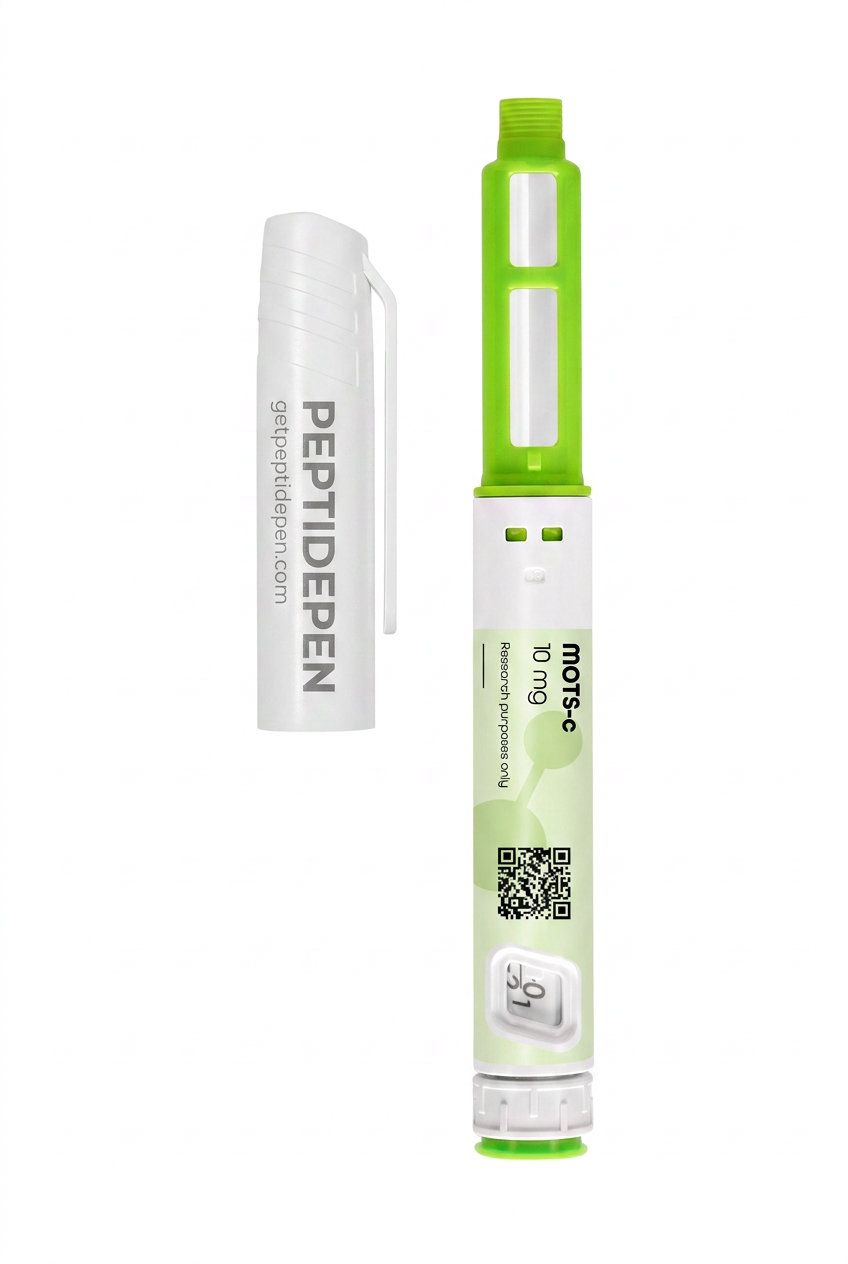
Cellular Longevity • Metabolic & Fat Optimization
MOTS-c — mitochondrial-derived peptide for metabolic flexibility.
MOTS-c is a 16-amino-acid peptide encoded in mitochondrial DNA. It acts as a mitokine, signaling to skeletal muscle and adipose tissue to enhance insulin sensitivity and fat oxidation — effectively mimicking an exercise / fasting signal.
Each PeptidePen is filled in a controlled cleanroom and sealed with tamper-evident packaging. Batch documentation includes identity confirmation, HPLC purity analysis and concentration verification. Strictly for in-vitro research — not for human or veterinary use.
A full breakdown of mechanism, clinical findings, dosing references and safety signals — for researchers who want the complete picture.
MOTS-c is a peptide molecule discovered by Dr. Ping Ling and a team of scientists at the University of Southern California. This peptide is located in the mitochondria, the "energy centers" of our cells.
MOTS-c is a relatively new product still under research to fully understand its potential health benefits. However, scientific studies indicate that MOTS-c peptide produces several beneficial effects on the body.
One of the best-known effects of MOTS-c is its role in metabolism regulation. It is considered one of the key molecules responsible for controlling metabolism, leading to improved metabolic processes. Research shows that MOTS-c can enhance glucose tolerance, potentially aiding in diabetes treatment.
A study published in Cell Metabolism demonstrated that participants taking MOTS-c had better muscle function and greater physical endurance compared to a control group, suggesting MOTS-c improves physical endurance and muscle mass. It is also believed that MOTS-c may positively influence cognitive function and sleep quality. Another study published in Nature Communications found that participants receiving MOTS-c had improved cognitive performance and sleep quality.
MOTS-c acts as a signaling molecule that communicates with various cells and organs in the body. It may help reduce chronic inflammation and slow aging, contributing to a healthier and longer life.
As previously mentioned, MOTS-c is a new and innovative peptide, but scientific findings suggest it has several potential health benefits, including:
● Regulation of metabolism and improved metabolic processes — ● Enhanced glucose tolerance to help treat diabetes — ● Increased muscle mass — ● Improved physical endurance — ● Reduction of chronic inflammation and immune system support — ● Better sleep quality — ● Improved cognitive function — ● Enhanced cardiovascular health and reduced cardiovascular disease risk — ● Increased insulin sensitivity — ● Prevention of metabolic diseases such as metabolic syndrome — ● Greater resistance to stress — ● Improved mitochondrial function — ● Lower risk of age-related diseases and prolonged healthy lifespan
Although MOTS-c is a new product, numerous clinical trials are underway to evaluate its effectiveness and potential in treating various diseases. Some trial results include:
● In an early trial on mice, those receiving MOTS-c exhibited better metabolism and reduced inflammation compared to controls. — ● A trial published in Nature Communications showed that participants who took MOTS-c for 5 days had better cognitive performance and sleep quality. — ● In a Cell Metabolism study on athletes, those given MOTS-c showed improved muscle function and endurance compared to controls. — ● Trials on diabetic mice, also published in Cell Metabolism, showed that MOTS-c improved blood sugar regulation and led to weight loss.
The proper intake and dosage of MOTS-c depend on individual needs and goals. The typical Suggested Research Protocol is 2.5 mg administered once every 5 days.
● The pen programmer is set to 50 units (1 unit equals 1 programmer division) and apply into the abdominal area or front of the thigh. — ● After application, wait 10 seconds before removing the pen. Rotation of application sites is recommended. — ● One pen contains 200 units of 50 micrograms each. — ● One 10 mg MOTS-c pen lasts about 20 days depending on dosage.
Unit to microgram conversions: — ○ 1 unit = 50 mcg — ○ 5 units = 250 mcg — ○ 10 units = 500 mcg — ○ 20 units = 1 mg — ○ 50 units = 2.5 mg — ○ 60 units = 3 mg
So far, no side effects have been reported from taking MOTS-c peptide, but some may occur especially if high doses or prolonged intake occur. Rarely reported side effects include:
● Headache — ● Nausea — ● Stomach discomfort
MOTS-c is generally considered safe when used at recommended dosages and when avoiding excessive or long-term use.
Improves insulin sensitivity
Reverses high-fat-diet weight gain in rodents
Enhances mitochondrial fat oxidation
Exercise-mimetic gene expression
Form
Pre-mixed pen
Purity
≥99% HPLC
Storage
2–8°C
Shipping
Cold-chain
COA
Batch-matched
Select pen size and shipping region at checkout.
Each batch is HPLC-assayed and documented.
Insulated, temperature-logged delivery.
Reference dosing and references included.
Common questions about MOTS-c (Standard Pen) and PeptidePen orders.
No. All PeptidePen products are strictly for in-vitro laboratory research. Not intended for human or veterinary use.
Each pen ships with a batch-matched certificate of analysis. A digital copy is also available on request via your order confirmation.
Orders ship cold-chain (2–8°C) with insulated packaging, ice packs and a temperature log. Tracked delivery in the US and EU.
Yes. Contact our team for institutional pricing, custom concentrations and recurring shipments.
Damaged or off-spec pens are replaced free of charge. Contact support within 7 days of delivery.
Pre-mixed, batch-assayed, cold-chain shipped — order before 2pm for same-day dispatch.