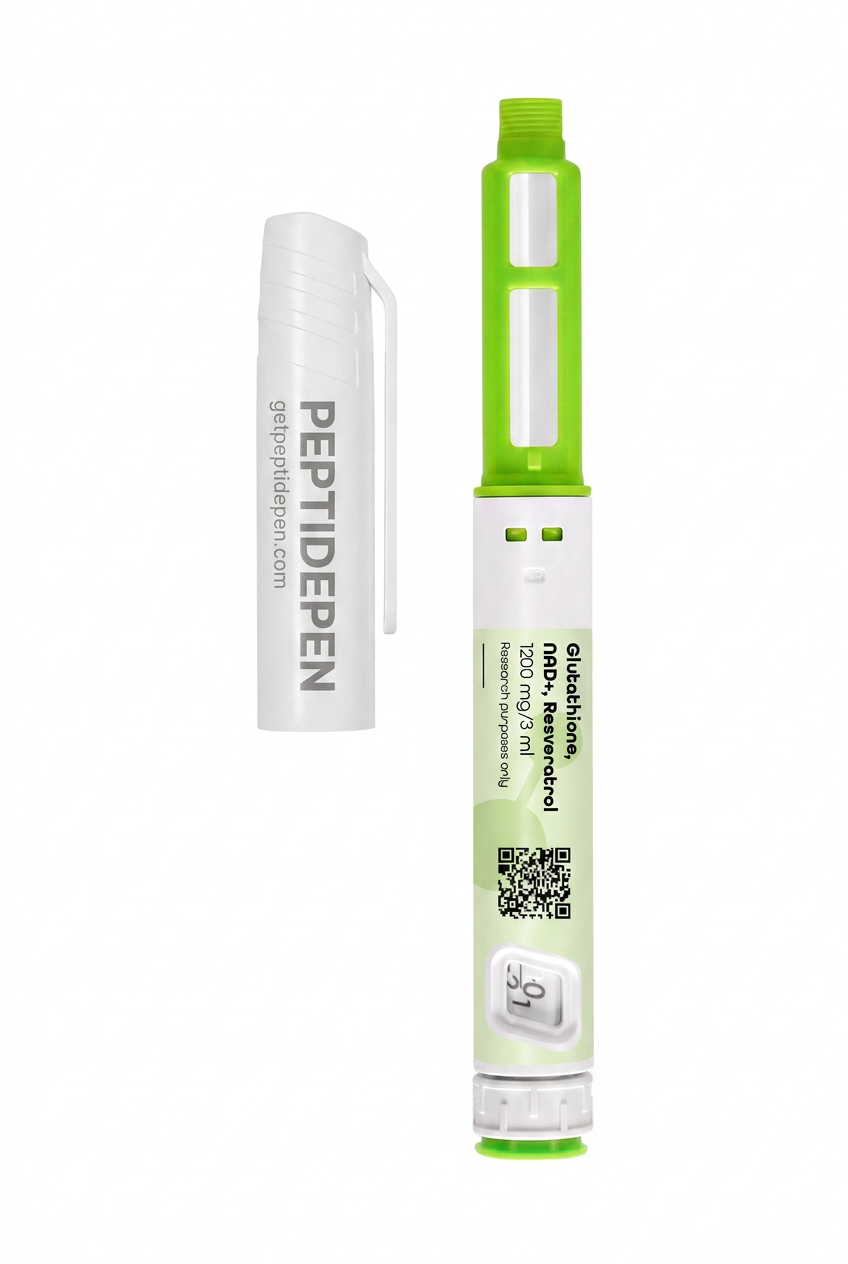
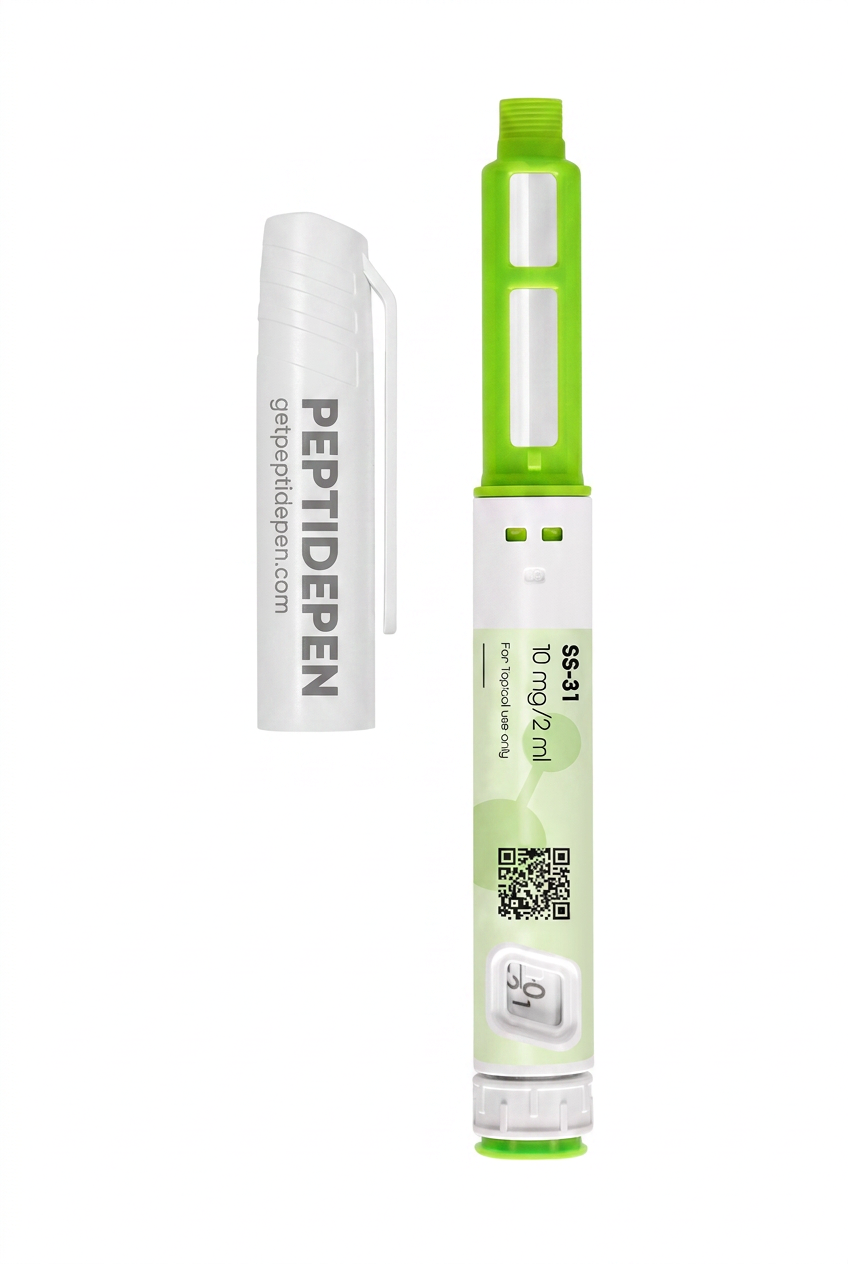
Each pen contains a precisely measured combination of Glutathione (600mg) – a powerful endogenous antioxidant, Resveratrol (500mg) – a potent epigenetic modulator that activates SIRT1, and NAD+ (100mg) – an essential coenzyme for optimal mitochondrial and cellular function. The pre-mixed formula is divided into 300 units of 400 micrograms each, allowing for precise, controlled dosing in research protocols. Its pen format offers convenience, stability, and accuracy—making it ideal for research focused on cellular rejuvenation and maintaining healthy cellular function, balanced oxidative states, adequate energy production, and effective regeneration processes that slow aging and promote vitality.
What Makes the Formula Unique?
Glutathione, NAD+ & Resveratrol Pen delivers three-tiered synergistic protection by: — ● Detoxifying and neutralizing oxidative stress (Glutathione) — ● Activating longevity-related genes (Resveratrol / SIRT1 activation) — ● Supporting mitochondrial function and energy metabolism (NAD+)
This targeted combination not only unites essential molecules that support cellular health, but does so in a delivery system tailored for consistent, research-based application.
Main Components and Mechanism of Action
Glutathione (600mg) — Glutathione is the body's most crucial endogenous antioxidant. It directly neutralizes free radicals, regenerates other antioxidants, and participates in phase II liver detoxification. Elevated glutathione levels have been associated with enhanced immune function, improved recovery from cellular stress, and increased cellular resilience.
Resveratrol (500mg) — Resveratrol is a polyphenol known to activate SIRT1, a gene linked to cellular resilience and lifespan extension in numerous studies. In addition to its antioxidant properties, it supports healthy blood circulation and helps modulate inflammatory pathways.
NAD+ (100mg) — Nicotinamide Adenine Dinucleotide is a critical coenzyme required for mitochondrial and sirtuin function. With age, NAD+ levels decline—resulting in lower cellular energy, weakened DNA repair, and faster aging. Restoring NAD+ has been associated with improved cellular repair, longevity, and energy homeostasis.
Synergistic Effect of the Formula
The carefully selected combination of Glutathione, Resveratrol, and NAD+ is designed to not just complement—but amplify—each other's biological effects, achieving powerful synergy at the cellular level.
● Glutathione serves as the frontline antioxidant, neutralizing reactive oxygen species (ROS) that could otherwise damage mitochondrial function and accelerate aging. Its redox-balancing role supports overall cellular stability, including DNA integrity. — ● Resveratrol activates SIRT1, a longevity gene that relies on NAD+ availability. This creates a feedback loop—Resveratrol enhances NAD+-dependent enzyme activity, which in turn supports DNA repair, apoptosis regulation, and energy metabolism. — ● NAD+ functions as a cellular catalyst, crucial for ATP production and activation of key repair enzymes like PARP and the SIRT family. Its energy-boosting effects are sustained by the oxidative protection provided by Glutathione.
Together, these components establish a self-reinforcing cycle of repair, defense, and rejuvenation, supporting optimal cellular environments and prolonging functional cell lifespan.
Scientifically Supported Research Potential
In research contexts, Glutathione, NAD+ & Resveratrol Pen shows promise in supporting: — ● Enhanced mitochondrial function and energy metabolism — ● Slowing of cellular aging markers — ● Reduction of oxidative stress and inflammation — ● DNA repair mechanisms — ● General liver and immune system support
Dosage and Administration in Research Protocols
● 1 unit = 400 micrograms total — ● Total per pen: 300 units — ● Suggested research protocol: 8mg / 20 units per day for 14 days, followed by a 14-day rest period — ● One pen lasts 15 days
Before each use, gently shake the pen for 10–15 seconds. In some cases, visible particles may appear in the solution—this is normal. These particles result from the protective lipid or polymer encapsulation of the active compounds, which helps stabilize them, prevent degradation, and allow for controlled release.
The formula is intended for systemic application and does not require localized administration near the targeted area.