Overview
DSIP (Delta-sleep-inducing peptide) is a peptide known for its ability to induce deep, restorative sleep, also referred to as delta sleep. DSIP was first discovered in the 1970s and is characterized by the following features:
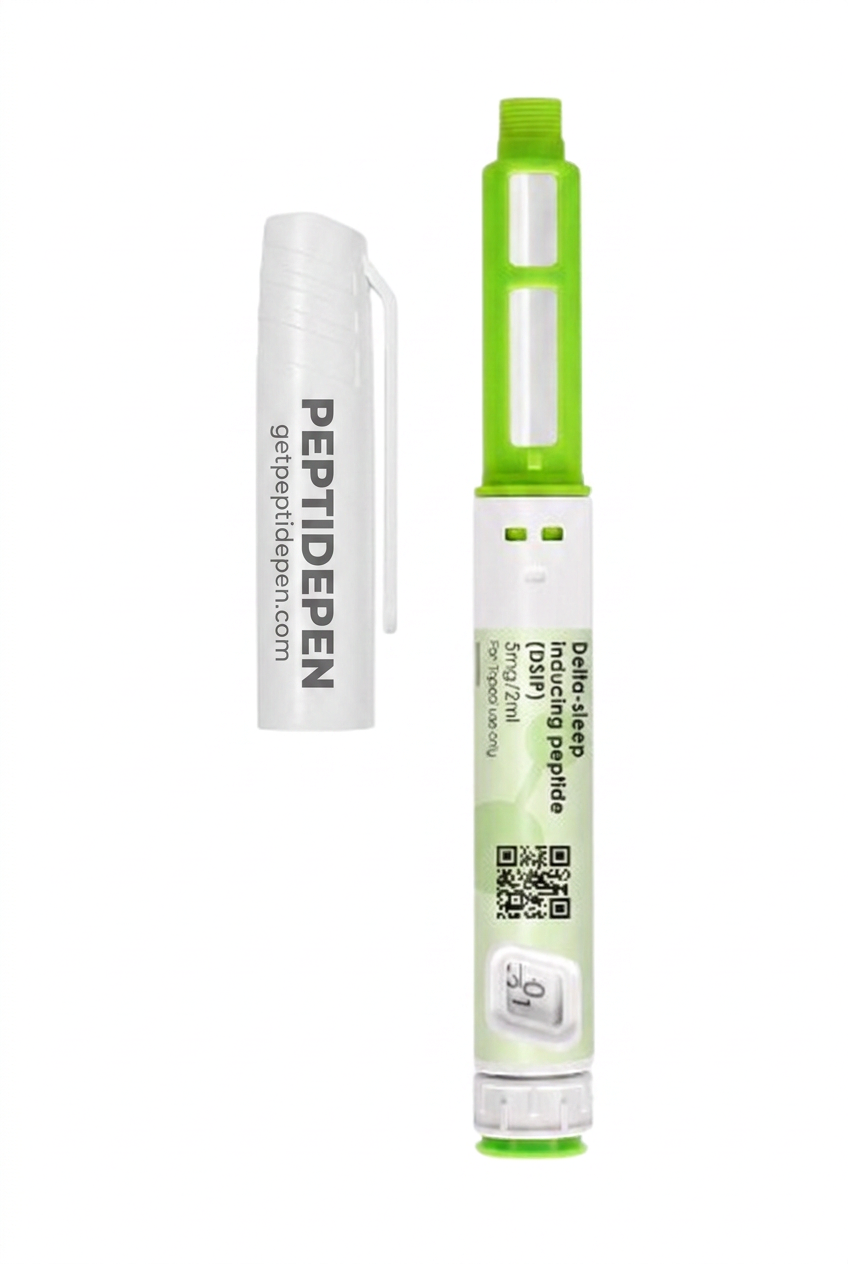
Cognitive & Neuro
DSIP — Delta Sleep-Inducing Peptide for deep-sleep research.
DSIP is a 9-amino-acid neuropeptide isolated from rabbit cerebral venous blood during electrically induced sleep. Studied for sleep onset, delta-wave architecture and stress-resilience.
Each PeptidePen is filled in a controlled cleanroom and sealed with tamper-evident packaging. Batch documentation includes identity confirmation, HPLC purity analysis and concentration verification. Strictly for in-vitro research — not for human or veterinary use.
A full breakdown of mechanism, clinical findings, dosing references and safety signals — for researchers who want the complete picture.
DSIP (Delta-sleep-inducing peptide) is a peptide known for its ability to induce deep, restorative sleep, also referred to as delta sleep. DSIP was first discovered in the 1970s and is characterized by the following features:
Structure and Origin:
This peptide is composed of several amino acids and is classified as a neuropeptide, meaning it acts within the central nervous system.
Sleep-Regulating Effects:
The primary function of the peptide is to promote and enhance deep sleep. It is known for its ability to increase delta waves during sleep, which are associated with restorative, deep sleep.
Potential Therapeutic Applications:
Research explores its potential use in various conditions, such as sleep disorders, stress, chronic pain, and even support in overcoming dependencies.
Mechanism of Action:
Although its exact mechanism of action is not yet fully understood, it is believed to influence neurotransmitters and neurochemical pathways in the brain that regulate sleep and stress.
DSIP is of interest in the context of alternative approaches for the treatment of sleep disorders and stress management.
DSIP (Delta-sleep-inducing peptide) is associated with a number of potential benefits, although it is important to note that many of these still require more in-depth scientific research. Based on available data, some of the benefits of DSIP include:
● Improvement of sleep quality: DSIP is best known for its ability to promote deep, restorative sleep, especially in cases of sleep disturbances.
● Reduction of stress and anxiety: It is believed to have a calming effect that may help reduce stress and anxiety.
● Antioxidant properties: Some studies suggest it may have antioxidant effects, helping to combat oxidative stress in the body.
● Relief of chronic pain: DSIP is being studied for its potential application in the management of chronic pain.
● Regulation of endocrine functions: It may positively influence the endocrine system by regulating hormone levels.
● Improvement of the immune system: Some reports suggest that DSIP may have a positive effect on immune function.
● Management of dependencies: Preliminary data indicate that DSIP may help in the management of certain types of dependencies.
● Normalization of blood pressure: The peptide may contribute to the normalization of blood pressure in cases of hypertension.
● Regulation of circadian rhythm: It may help regulate the body's internal clock, which is important for overall health and well-being.
● Improvement of concentration and memory: Some studies suggest that DSIP may have a positive effect on cognitive functions.
Clinical trials of DSIP (Delta-sleep-inducing peptide) are still at an early stage, and therefore the overall information regarding results is limited. Some key aspects include:
Some studies show that DSIP may improve sleep quality by increasing the duration of deep sleep and overall restfulness. In addition, there are data suggesting that the product may reduce symptoms of stress and anxiety, which would be relevant in the context of such conditions.
Research also examines the peptide's impact on hormone levels, particularly those related to stress and sleep, as well as its antioxidant properties, which may provide benefits for overall health and resilience to oxidative stress.
There is also preliminary evidence that DSIP may help in the management of chronic pain and improve cognitive functions such as concentration and memory. Some studies also focus on its potential impact on the reproductive system. Despite these promising results, it is important to emphasize that research is still in its early stages, and further studies are needed to better understand the effectiveness and safety of DSIP in use.
Proper use and dosage of DSIP depend on individual needs and goals; it is commonly used in amounts ranging from 250 mcg to 450 mcg once per day.
The correct daily amount of DSIP is from 10 to 18 units per day.
Additional usage instructions:
The pen mechanism is set by turning it to 10 or 18 (1 unit equals one division of the mechanism) and the product is administered in the abdominal area or the front of the thigh. After the product is delivered, wait 10 seconds before removing the applicator tip. Rotation of the application site is recommended.
The duration of a cycle with this peptide ranges from 1 to 2 months.
○ One pen contains 200 units of 25 micrograms each.
○ One DSIP pen (5 mg) is sufficient for 15–20 days, depending on the daily amount used.
Example of calculated units per DSIP pen (5 mg) corresponding to micrograms:
○ 1 unit = 25 mcg
○ 5 units = 125 mcg
○ 10 units = 250 mcg
○ 16 units = 400 mcg
○ 18 units = 450 mcg
○ 20 units = 500 mcg
The rest period after completing a DSIP cycle may vary depending on individual responses and specialist recommendations. Often, a rest period equal to the duration of the cycle itself is recommended. Thus, if the cycle lasted 4 weeks, the rest period afterward would also be 4 weeks.
Possible side effects of using DSIP (Delta-sleep-inducing peptide) are not yet fully clarified due to limited available scientific research. However, based on current information, the use of DSIP may include some side effects, including:
● Headaches or fatigue: Headaches or a feeling of fatigue have been reported, especially at the beginning of use.
● Hormonal changes: Since DSIP may influence hormone levels, there is a possibility of mild hormonal changes.
Allergic reactions: Allergic reactions have been observed in very rare cases. Consultation with a specialist is recommended before using DSIP.
Increases delta-wave (deep) sleep
Reduces sleep latency
Modulates HPA-axis and cortisol
Non-sedating, non-habituating profile
Form
Pre-mixed pen
Purity
≥99% HPLC
Storage
2–8°C
Shipping
Cold-chain
COA
Batch-matched
Select pen size and shipping region at checkout.
Each batch is HPLC-assayed and documented.
Insulated, temperature-logged delivery.
Reference dosing and references included.
Common questions about Delta-Sleep-Inducing Peptide and PeptidePen orders.
No. All PeptidePen products are strictly for in-vitro laboratory research. Not intended for human or veterinary use.
Each pen ships with a batch-matched certificate of analysis. A digital copy is also available on request via your order confirmation.
Orders ship cold-chain (2–8°C) with insulated packaging, ice packs and a temperature log. Tracked delivery in the US and EU.
Yes. Contact our team for institutional pricing, custom concentrations and recurring shipments.
Damaged or off-spec pens are replaced free of charge. Contact support within 7 days of delivery.
Pre-mixed, batch-assayed, cold-chain shipped — order before 2pm for same-day dispatch.